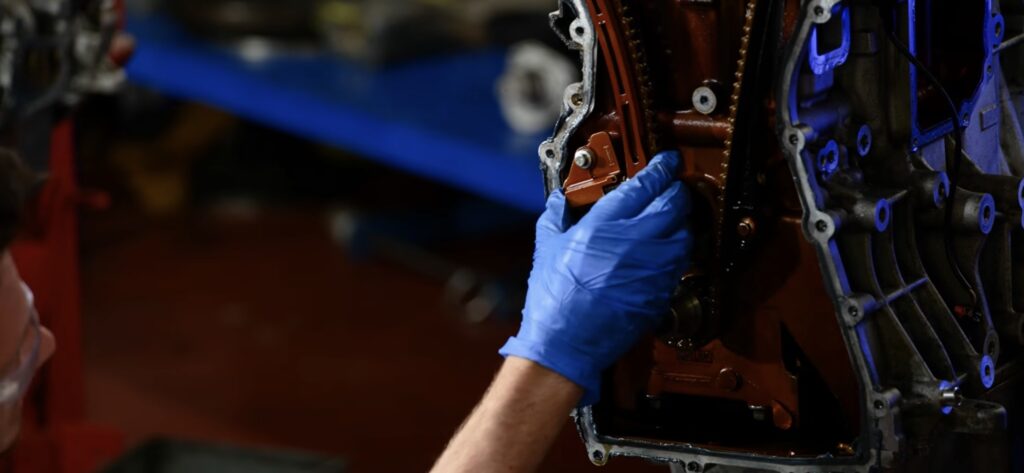
There’s this deep sense of satisfaction that comes from repairing, rather than replacing. And if one can prevent the need for a repair, even better. Living in a small rural city, our local garbage dump was a place of wonders for a kid. It’s where I found and repaired my first GT racing sled and repaired numerous “broken” bicycle parts. Which is why I began investigating the reasons behind some timing chain tensioners prematurely failing in the Land Rover 5.0 V8 engines. Mine has 250,000km’s with no issues. And I would prefer to keep it that way.
As I researched I discovered that preventing timing failures may be interesting to owners of many models of this era, looking to maintain their pride and joy. A quick Google search revealed nearly every mid 2000 engine I searched had reports of premature failures. This was across Mazda, Toyota, BMW, Audi, Volkswagen, Ford, GM, and Jaguar to name a few. Toyota’s 5.7L 3ur-fe V8, BMW’s N62 V8, Mercedes smooth M272/M273 V6, GM 4.2L Atlas, even the early generations of the LS, and of course the Jaguar 5.0L AJ-V8. Does that make these unreliable? No, these are all considered to be highly reliable and durable engines. I’ll get into some of the exact reasons below.


In cycling, one quickly learns that keeping components clean and serviced significantly increases the lifespan them. Working as a bicycle shop mechanic one Summer, I was handed a well-used (but poorly maintained) biked destined for the bin. As the new guy I was assigned this unwanted job. But this is the sort of thing I relish. Rolling up my sleeves I went to work. Years of refurbishing components for personal use had taught me that most “irreparable” items were simply parts requiring TLC. This bike was no exception. A few hours later it was refurbished (it looked like new) and tuned to perfection. It would have many years of life to come.
The mid 2000s is an interesting period for the combustion engine.
Arguably, manufacturers had mastered the art of engine building. Well-known Automotive Technicians like AMD, behind The Car Care Nut, and others often recommend these years for a good reason. They’re good engines. Engineered for performance and durability without being overly complicated. When you lift the hood, it’s the engine you see, rather than a network of pipes, wiring and tubes.
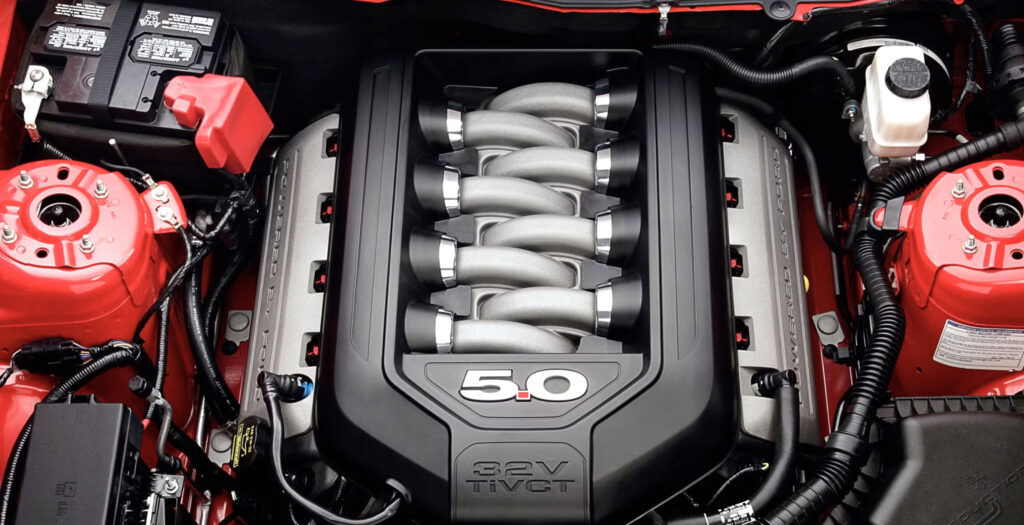
It was also a generation where emission regulators were pushing for fuel efficiency and using financial incentives (penalties) to motivate the OEM manufacturers to comply. Manufacturers began designing engines for tighter tolerances with lower viscosity oils, longer service intervals, direct injection and evap/purge systems to burn oil and fuel fumes.
And it worked. Engines were more powerful and more efficient. But there was a cost. Timing chain systems were prematurely wearing.


The good news is timing chains, guides and tensioners are serviceable items, much simpler to repair than say engine knock, crankshaft failure, or bearing wear.
But, timing chains and tensioners are engineered to be lifetime parts. So what happened? Could it be that ALL automotive engineering teams happened to design bad timing systems? Or could there be another culprit at work? One that is completely preventable and even reversible?
I’m going to focus specifically on the AJ-V8, because I happen to be familiar with it, but this applies to all engines of this era with timing chains.
Jaguar’s AJ-V8
Designed by Jaguar, the AJ-V8 was ranked as one of the top 10 engines by Ward Auto Magazine. The reason it’s ranked so well is it blends performance, refinement, and durability (Jaguar AJ-V8). It’s been in production for 28 years, with the AJ133 5.0L being the last variant of the AJ-V8 engine last used in the F-Type and Defender.
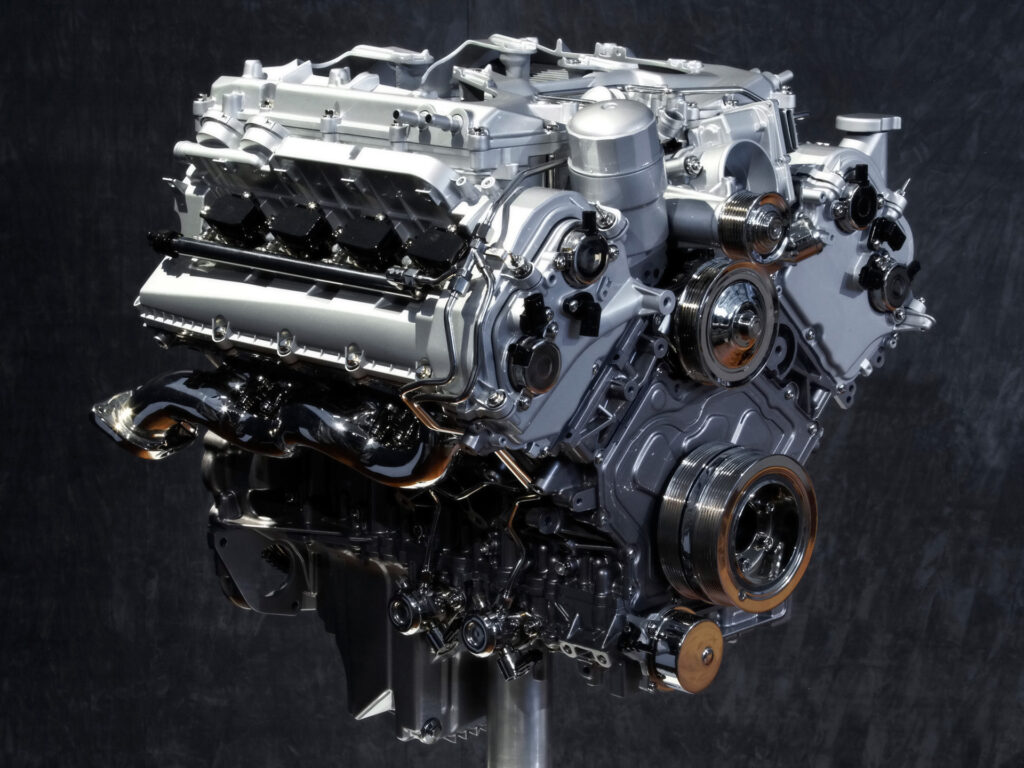
The dual overhead cam design with four valves per cylinder delivers smooth power delivery, minimal vibration, and helped make Jaguar V8’s feel like luxury machines. While the 5.0L comes in a naturally aspirated version, it was engineered for force-induction from the factory. As a result it has excellent thermal design, good cooling passages, and a well engineered aluminum block which makes it ideal for towing or remote trips in extreme environments.
In short, like many V8’s of this era, the 5.0L V8 is an over-engineered platform built to sustain the demands of a heavy SUV towing or overlanding. It’s the reason I chose the 2012 Land Rover LR4.
And mine happens to have more than 250,000 km’s on the odometer with the original timing chains and tensioners. It runs like a dream. And I’d like to see how long it’s possible to keep it running like this before needing to replace the timing tensioners on mine.
What plagues the Timing Chain?
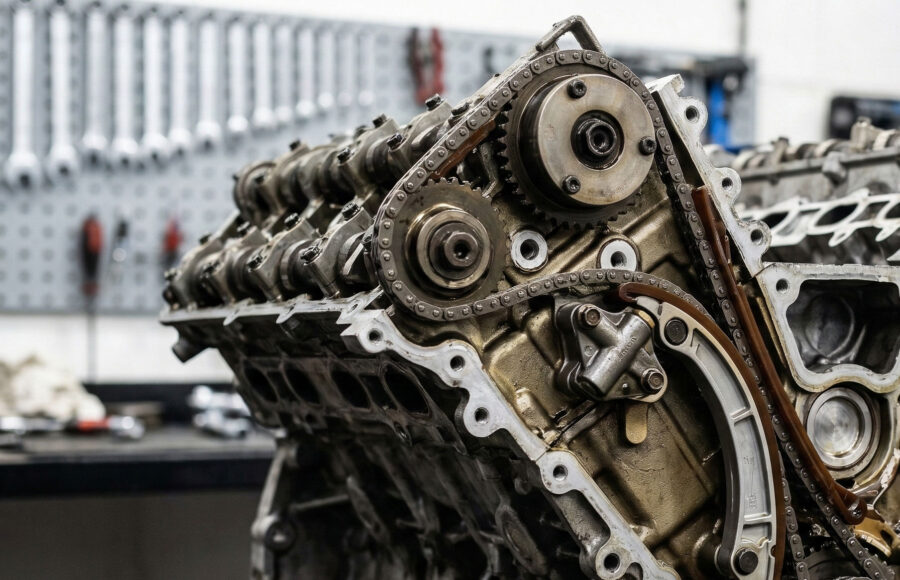
Timing chains loop around the crankshaft sprocket and camshaft drive sprockets. They use chain guides to keep the chains aligned and tensioner push rods pressed against these chain guides to keep the chains under tension.


(If you’ve ever wanted to see a complete build of the AJ133 V8, there’s this great mechanic simulation video on YouTube doing just that.)
When the tensioners begin to fail the first symptom you’ll hear is a metallic rattling sound as the chain has too much slack. Usually, it first appears on cold starts, but then the noise progressively gets worse as the tensioners and guides wear.
Opinions on the internet vary as to the root cause of this failure.
In the case of the AJ133, some argue that the place where the tensioner push rod makes contact with the timing chain guides is indented and made of aluminum and wears down, as a result the tensioner isn’t able to extend far enough to keep the chains under tension.


When inspecting the timing guides, you’ll see the original ones often have wear at the ridge/shoulder of those points of contact. The replacement tensioners and guides have an updated design, improving the issue of wear.
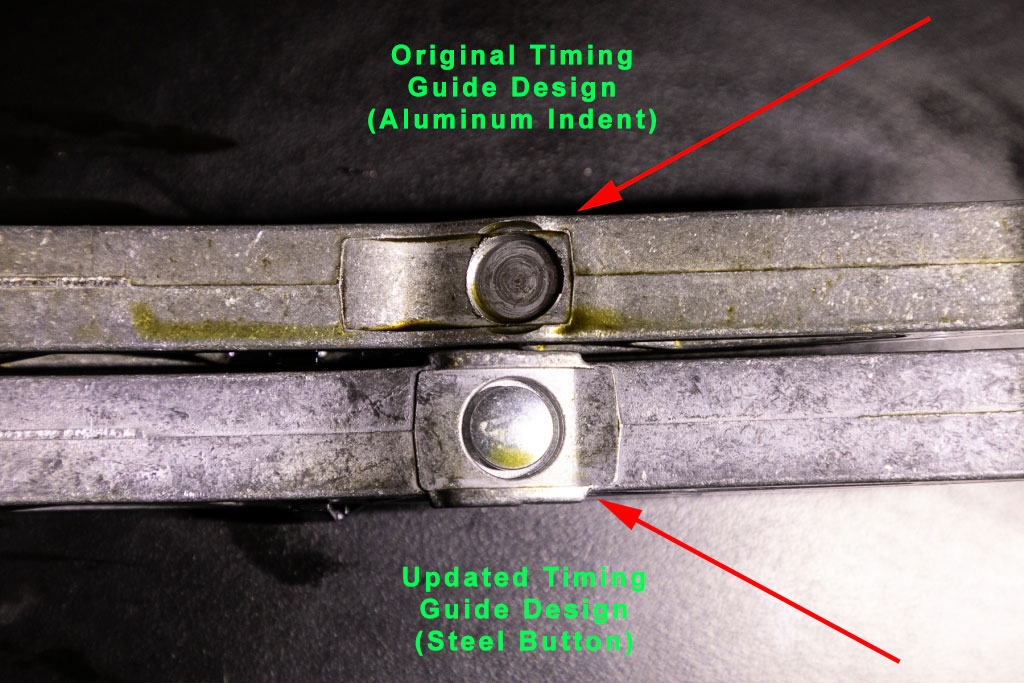
But in all cases where a guide has worn edges, the tensioner has failed as well. And in same cases new tensioners fail, even after the replacement.
So the question is, which failed first? The guide or the tensioner?
There’s an interesting video investigating the root cause of the Toyota 5.7L V8 timing chain problems. The timing tensioners had failed and they were cut open to see what caused them to fail. Rather than finding sludge or debris preventing the tensioners from working, it was discovered to be the build up of oil varnish.
It’s a curious discovery. It wasn’t a lot of varnish build up either. The guy inspecting it was surprised that the oil pressure wouldn’t be able to overcome the resistance. So he did some math. When calculating the pressure that would be inside the tensioners, it turned about to only be about 18 pound feet of force. At that low pressure, it doesn’t take a lot of varnish before the resistance of the varnish made the tensioner inoperable.
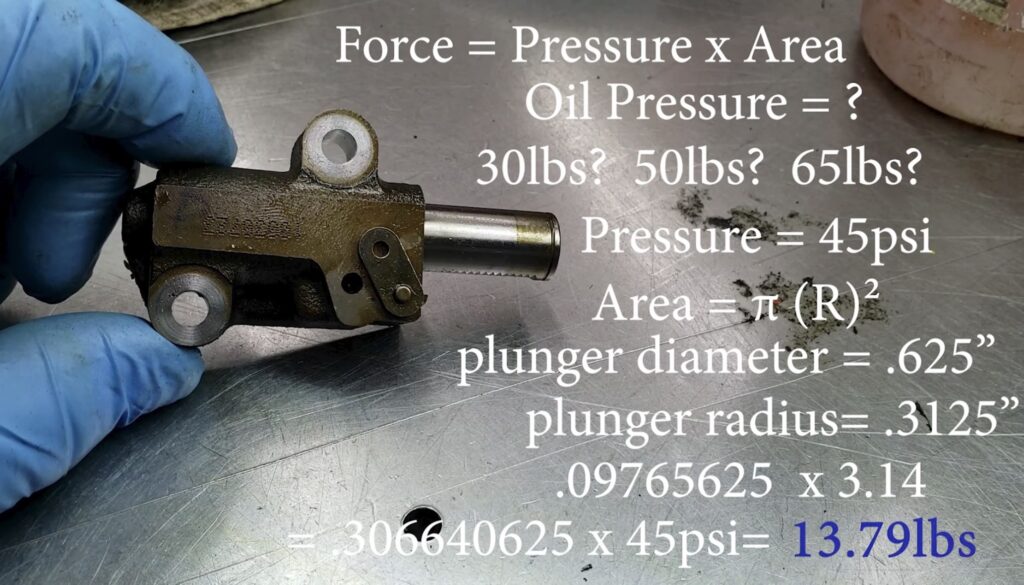
Could the root cause be that simple? Oil Varnish!
And is there a way of not only preventing it, but reversing it?
In short. Yes.
A lot has improved in oil chemistry in the last few years.
Auto manufacturers extended their recommended service intervals to 15,000 miles or more. The problem is that even high-quality modern synthetic oils eventually break down. High engine heat, oxygen, and contaminants chemically break down the oil into sticky resin-like compounds that bake onto engine components. This creates the yellow/orange coating we call varnish.
The more towing, the more short city driving, the more demands on the engine – the more wear oil experiences. If the service interval extends, then that bad oil is staying longer in the engine leaving behind more varnish coating on the engine.
In almost all cases mechanics now recommend 5,000 mile oil changes. Not the 1 year oil service set by the manufacturers.
Varnish alone isn’t enough to effect most components of the engine. But, parts with very small oil passages, or tolerances, like tensioners or lifters are the first to show symptoms.
The more I researched this topic, the more the evidence pointed to oil contamination and varnish build up being the root cause of timing failures. And this will also explain why the updated tensioner designs can fail as well. Varnish build up has no favourites.
Back to the AJ133, as that varnish slowly builds up in the tensioners, it will reduce the amount of force the push rod is applying to the guides, causing them to vibrate, wear and eventually rattle. Dirty oil and vibration is causing the wearing on the metal of the guides.
What’s the solution?
We need to remove the varnish. Fortunately, there are products available that can both clean and protect the engine components from further wear. I’ve tried a variety of them with positive results.
As I mentioned before, I’m experimenting to see how long it’s possible to run my LR4 on the original timing chains. The current recommendation by mechanics is to change oil more frequently. But that won’t improve the state of existing varnish and build up on the tensioner.
Confidently I can say that my engine is quieter than the day I bought it. I have a recording of the sound when purchasing it. And I’ve recorded it throughout my ownership. I also example the color of the engine by looking through the oil fill cap. Look for any particles, deposits or signs of wear in the oil filter. And hear for any changes in engine noise. It’s rudimentary I know, but the results are promising.
What have I tested?
Everything from 0w20, 5w30 to 5w40 high quality synthetic oils. Castrol Edge and lately Valvoline.
Idling with Marvel Mystery Oil additive before an oil change.
Idling with transmission fluid before an oil change.
Both Marvel Mystery Oil and Transmission fluid are thinner than oil so they’re able to reach areas regular engine oil may not. I wouldn’t recommending driving the vehicle with them. But what I did was drain 2 litres of engine oil and then replace those 2 liters with either Marvel Mystery Oil or transmission fluid. Then idling the engine for 20-40 mins before changing the oil. Transmission fluid has more detergent additives than engine oil, making it very effective at cleaning passages. (Again this is what I did. I wouldn’t recommend this as it could harm an engine with a lot of wear. I once had a worn lawn mower engine blow a rod after an oil change. I guess it had never been serviced and the fresh oil was too thin for it.)
I was going to test the Liquid Moly Hydraulic Lifter additive as well, because like the other additives it’s formulated to get through tight passages and clean them. But the engine was running so smoothly at this point there was no point.
I also tried 5w40. It did increase the oil pressure (which was my objective) and quieted the engine but I do not recommend it. I believe it’s too thick and suspect that over time it will produce more wear on the engine as it is designed for 0w20.
5w30 also increased oil pressure. Then I switched back to 0w20 to compare. The truth is the engine is as quiet now on 0w20. So I will continue with that.
At this point I switched from Castrol Edge (recommended by Jaguar/Land Rover) to Valvoline Restore and Protect. And I think this is ultimately the best solution.
Lake Speed Jr. is an oil analysis expert. He shared some tests ASTM Test Lab performed on various oils. Valvoline Restore and Protect performed the best, not simply when it came to preventing wear, but cleaning as well.
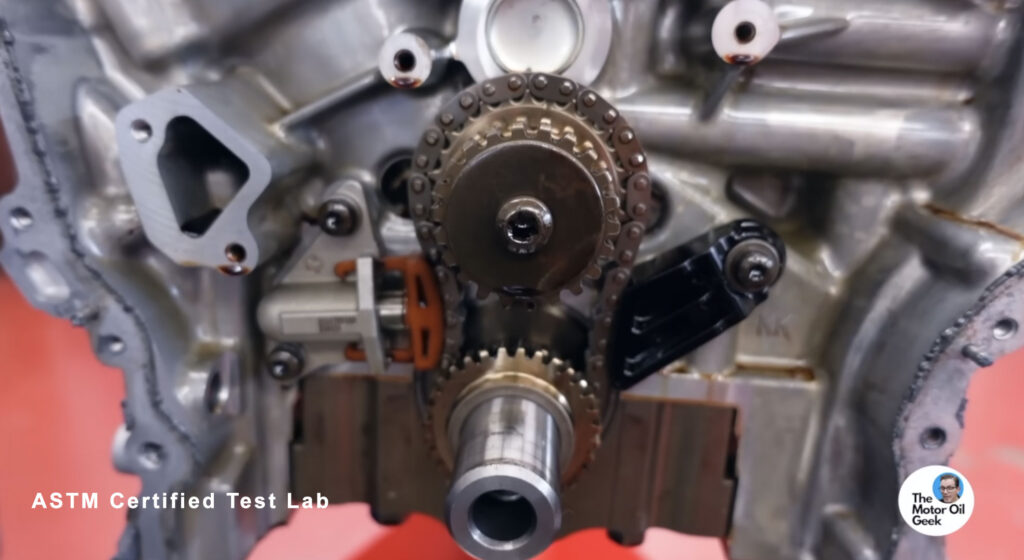
I figured it was worth trying. Valvoline makes the claim that it will completely restore the engine internals to factory finish by removing up to 100% of deposits after 4 or more oil services. Time will tell if their claims are true.
Conclusion
My vehicle has a history of regular oil changes performed by Land Rover using Castrol Edge Professional 0w20 oil. The last few years before my ownership it was maintained at an independent shop. Today I perform all my own oil changes. I continued using Castrol Edge before testing Valvoline. I suspect this service history is the reason the engine is in the shape it is.
Yet, clearly even with the high quality oil and services, it has benefited from cleaning additives. Most notably by how quiet it is running.
I plan to continue publishing updates on my timing chain status here.
I hope this is useful for anyone running an engine from the mid 2000’s. Based on what I’ve learned, timing tensioner failures are not inevitable, the root cause is preventable. Regular oil service intervals will help, but the use of cleaning additives can actually reverse the problem.
Happy servicing. Here’s to the art of repairing and maintaining.
Update:
When I wrote this article I was confident it is reversible, now I’m certain. The team at Gears and Gasoline have been running a long-term experiment. Two 500,000 mile engines were disassembled to examine internal engine deposits. One had only used conventional oil, needless to say the varnish and build up was substantial. In fact, it was obvious it was near or at the end of its life. They were then reassembled and run for two oil changes using Valvoline Restore & Protect. The results are interesting.
Before: The timing tensioner was sticking. The piston seals were stuck.
After: The timing tensioner was working. The pistons seals were free.
After manually testing the timing tensioner they said, “Oh, under tension! It would not do that last time. It would have stuck.” Well worth the watch.