
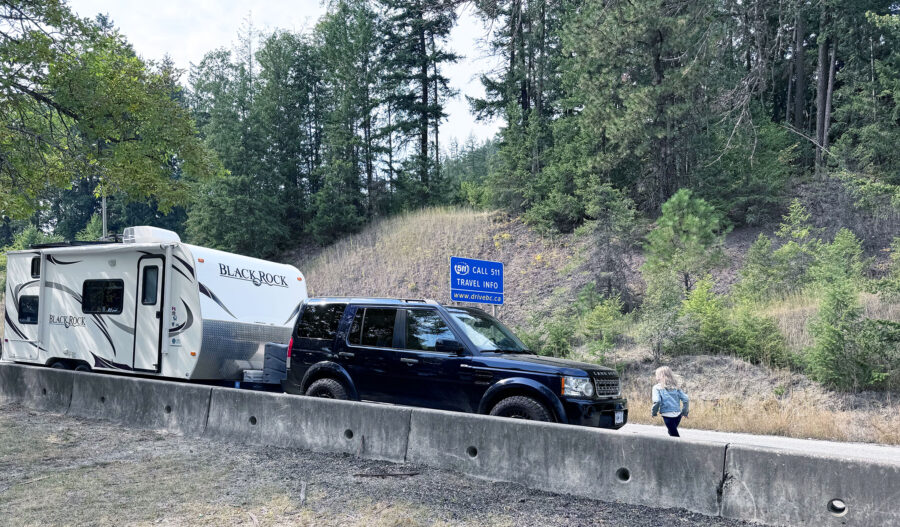
I’ve previously towed with a 2021 GMC Sierra 1500 using a weight distribution hitch, so when I heard that Land Rover advised against using a weight distribution hitch with the LR4, I decided to do a bit of research on the best setup before towing with it. However, I quickly discovered, there isn’t very much information available. 2 years later, here’s the setup I’m using and what I’ve learned towing with the LR4.
I tow a trailer with a 4750 lb dry weight. It’s approximately ~6500 lbs fully loaded. And is 23 feet long. I’ve towed it over numerous mountain passes across our beautiful province of British Columbia. And the Land Rover hasn’t skipped a beat.
Is it true that Land Rover does not recommend using a weight distribution hitch?
This is one of the most fiercely debated topics in Land Rover forums. And it created a lot of confusion while researching about it. Yes, it is true that Land Rover says not to use a weight distribution hitch. It’s stated in your Land Rover LR4 owner’s manual. There are many assumptions as to why.
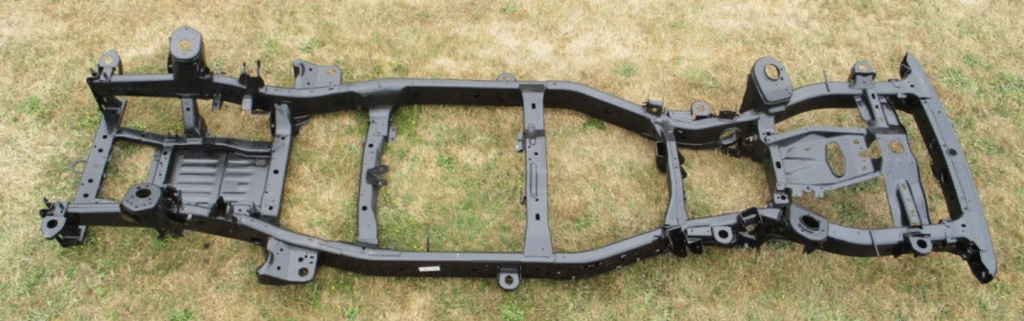
The Land Rover Discovery 3 and 4 have both a full ladder frame chassis and a monocoque chassis bolted on top. As you can imagine, this creates a very solid and strong truck. They wanted to combine the heavy-duty structural strength of a traditional truck ladder frame, with the rigidity required for high speed cornering that comes from a monocoque chassis. Land Rover was pushing the envelope with its introduction of the L319 in 2004. Also introducing the world’s first terrain response mode.
But how does this affect towing? I’ll get into that next.
Why we normally use weight distribution hitches
When a trailer is hitched to a vehicle, the tongue weight pushes straight down on the rear of the vehicle. We’ve all seen that squatting truck towing a heavy trailer. Too much weight on the rear can actually lift the front wheels off the ground, reducing braking and steering. A weight distribution hitch uses steel bars to lift the tongue and transfer some of that weight forwards towards the front of the vehicle and backwards to the trailer axel, levelling out the hitch and reducing the bouncing seesaw effect. As a result the headlights, front brakes, steering, and ride height return to the normal driving position.
Addressing the assumptions
One of the assumptions suggested that the reason Land Rover doesn’t recommend a weight distribution hitch is that the additional forces generated by the weight distribution bars would bend the Land Rover’s chassis. No, this is incorrect. The discovery has a heavy-duty ladder frame, and it is plenty capable of carrying the stress of a weight distribution hitch.
Other people argue that it fights against the tow stability system. Or that it will overwork the compressor.
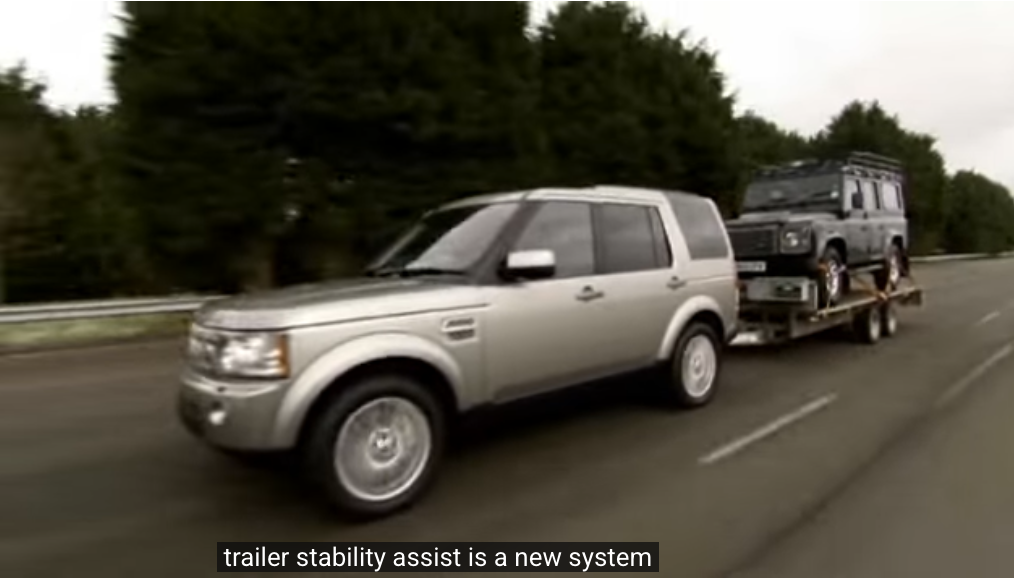
When it senses oscillation or sway the engine torque is reduced. It deploys brake pressure to individual wheels on the truck. And it adjusts the air suspension individually as needed. And it’s very effective. I’ve driven through significant cross-winds, undulating roads, sudden dips/lips, curving highways, and the trailer has remained incredibly composed. While driving in convoy, the driver behind me, using a weight distribution hitch and sway bars experienced sudden sway that caused the back of their truck to pivot and had to pull to the side to address their setup. The Land Rover didn’t.
In short, it doesn’t fight the trailer stability assist. The trailer stability assist will work to reduce sway irregardless, it just will have to work less often if using a sway bar or weight distribution hitch. Some LR4 owners choose to use a weight distribution hitch without any issue. If you feel better using a weight distribution hitch, go for it. And I think it makes sense for the LR3, which doesn’t have trailer stability assist.
Watch Land Rover’s Trailer Stability Assist video on YouTube.
The third point offered is that the OEM hitch isn’t engineered for it.
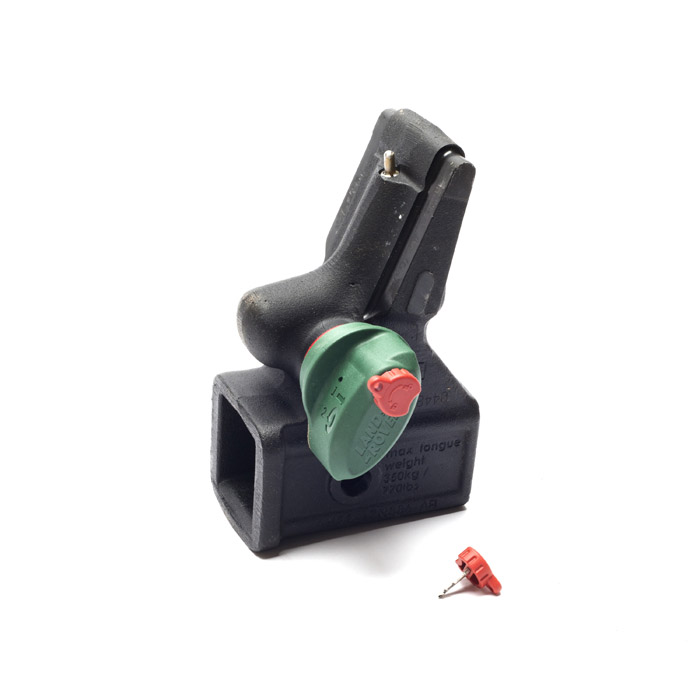
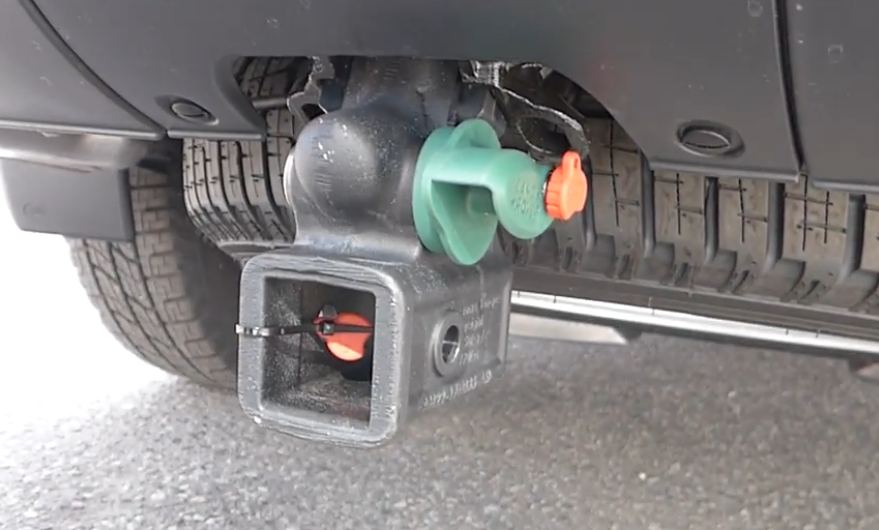
Land Rover has very unique design on their hitch receiver. And it’s incredibly cool. I love it for so many reasons. It slides in and snaps its locking pin in place when installing it, or drops out with a twist of the handle, all within about 3s. This means I can keep my hitch setup with the clamp still installed, drop it out, and stow it away when leaving the campsite. Then clip it back in with one click. I’ve done the same with my mountain bike rack. One click install, and ready to rock. Owners report using the OEM hitch receiver with a weight distribution hitch without any issues (See this forum discussion.) I can’t see a reason why it would be a problem. But, there are other aftermarket hitch options available that would eliminate any concern.
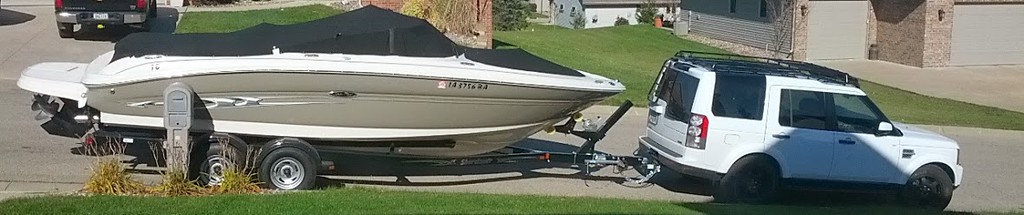
But here’s the big takeaway I’ve learned towing with it. The Land Rover LR4 does not need a weight distribution hitch towing. It’s completely unnecessary.
- The rear air suspension auto-levels the vehicle, keeping it composed
- The LR4’s inherit geometry and mass increase the critical sway speed tolerance
- The stability assist is very good at reducing sway/seesawing
- The geometry and weight of the vehicle is designed for the 770 lb (350 kg) tongue weight limit
- It has a long wheelbase and short rear overhang resisting yaw
- The air suspension keeps the ride vibration frequency consistent
I’ll quickly dive into those last three points, because they are probably the most important and never discussed.
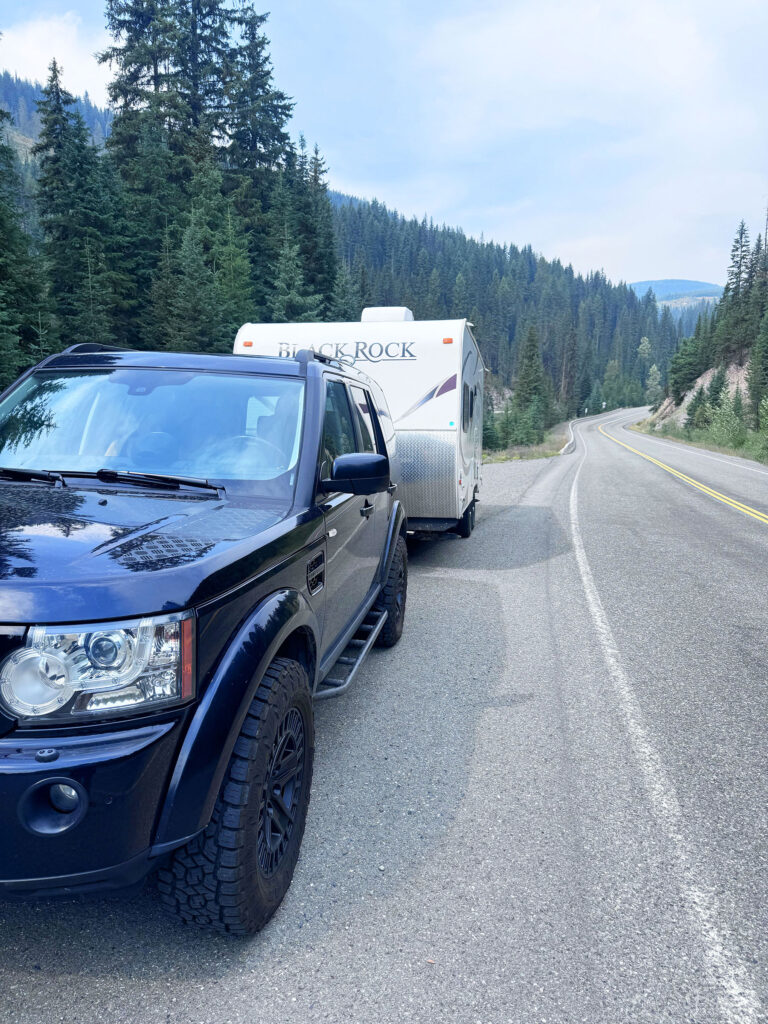
How the hitch tongue weight reduces weight on the front wheels.
When hitching a trailer, even if the vehicle self-levels, the weight of the tongue acts as a lever lifting weight off the front wheels. The further the hitch is away from the rear axle, the more of a lever it has to lift the front. But, when you do the math (which I did), you discover the actual amount of reduced weight is well within the engineered limits of the LR4.
Add nose weight W at the ball, a distance d behind the rear axle, on a wheelbase L:
- Rear axle load increases by:
W× (1 +d/L) - Front axle load decreases by:
W× (d/L)
A fully loaded tow hitch with the max tongue weight of 350kg will subtract about ~137 kg from the front axle. The front axle of the LR4 has approximately ~1350 kg of static weight pushing down. With a fully loaded hitch that weight drops down to about ~1213 kg. As you can see, still a lot of weight on the front wheels for braking and steering.
How the short overhang and long wheel base resist yaw.
The LR4 has a short rear overhang, a long wheelbase, and weights a lot. Approximately 2,548 kg or 5,623 lbs. When a trailer pushes sideways on the ball of the hitch, that force acts at the ball-to-rear-axle distance, creating a yaw moment that tries to steer the vehicle’s rear out from under it. However, the Disco 4’s short rear overhang reduces that destabilizing moment. Its geometry resists yaw. It’s another reason why it feels so stable towing.
A pickup with a long bed, has a much longer ball-to-rear-axle distance. Its bed is also relatively light in weight. Which is why even the best anti-sway modules just aren’t good enough. And why they absolutely must use weight distribution hitches with anti-sway bars. It’s the system most people are familiar with in North America. And it’s why it’s so helpful to understand why the LR4’s design doesn’t need one.
How the air suspension ensures the LR4 drives so well when towing.
Finally, the active air suspension dampens the frequency of oscillations and keeps them consistent even when under load. In traditional suspension setups, think heavily loaded steel springs, the frequency is lower. The lower the frequency the more wallowing, pitch and flow. Which is why someone may say their, “loaded truck rides like a boat”. The air suspension in the Land Rover, however, keeps the ride frequency laden close to its ride frequency unladen.
That single fact is the reason why the Disco 4 drives so well towing. It rides, pitches, and reacts almost the same with 300 kg on the ball as with an empty rear.
What are the tow specs?
Maximum braked towing capacity: 7716 lbs (3,500 kg)
Maximum tongue weight: 770 lbs (350 kg)
What is my setup?
All that makes sense on paper, but here’s what I use in real life:
- An aluminum tow hitch rated for 8,000 lbs (to reduce tongue weight)
- A tow ball rated for 12,000 lbs
- The factory trailer hitch receiver rated for 770 lbs tongue weight and 7716 lbs tow capacity
- The factory Land Rover towing wiring harness
- Redarc Tow-Pro Liberty trailer brake controller
And that’s it. I know, it’s very counter-intuitive to anyone towing in North America. Which is the reason I wanted to understand why it worked.
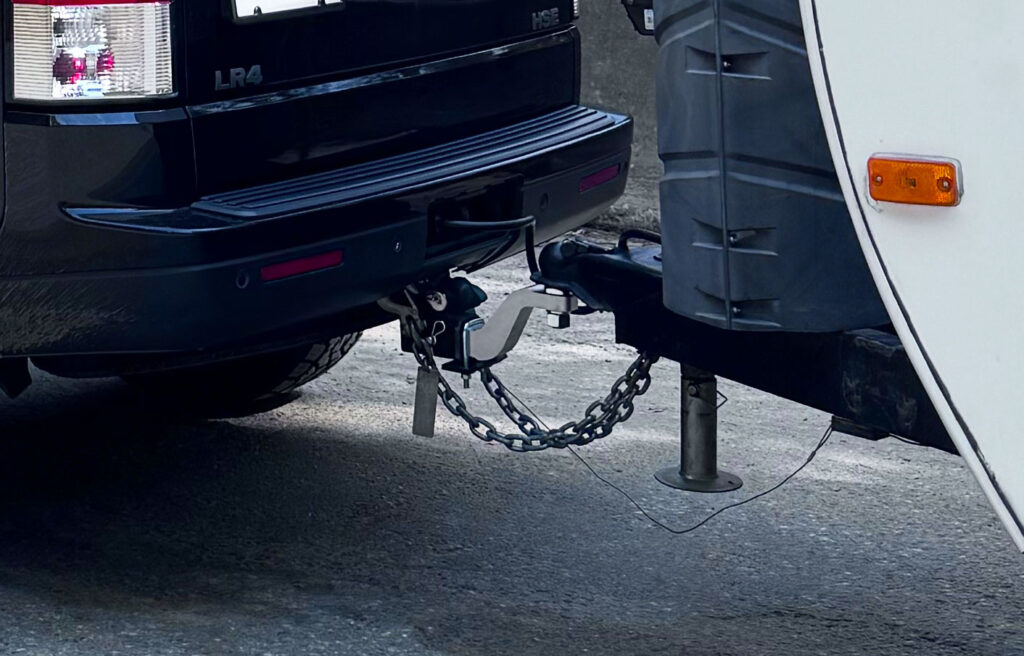
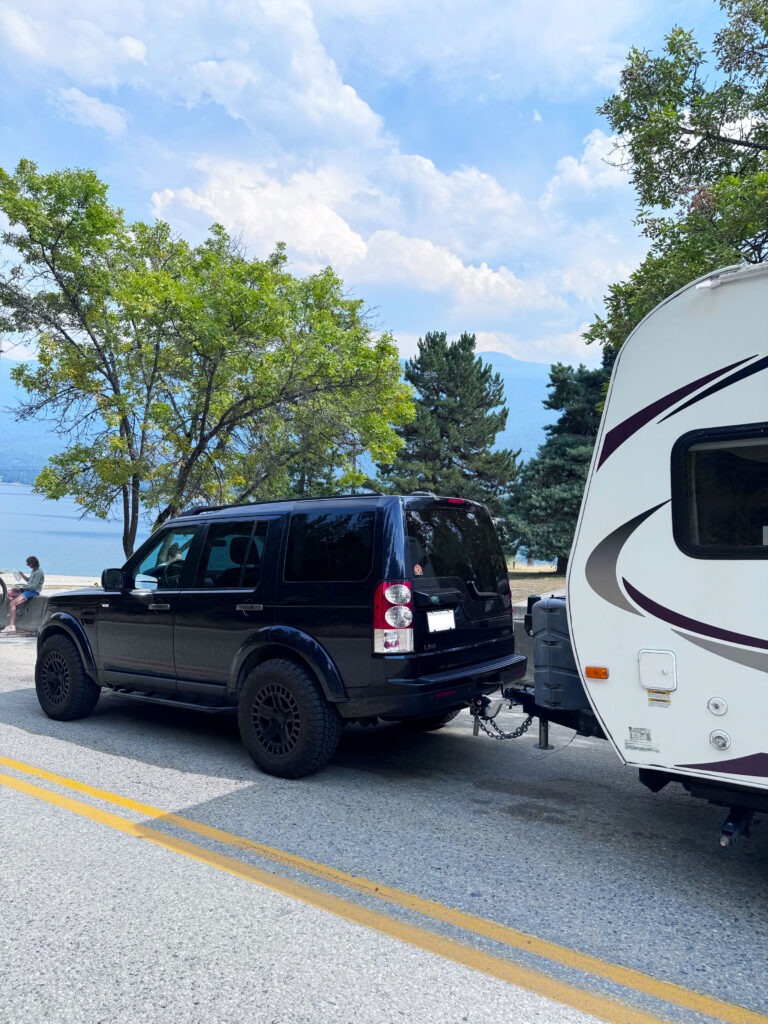
It’s the least involved trailer towing setup I’ve ever used. I originally planned on adding a trailer anti-sway bar, and that may be something I do add in the future. That said, I’ve faced severe cross-winds without any sway.
Conclusion:
The Discovery 3/4 platform is very well suited to towing. The trailer stability assist in the Discovery 4 (LR4) makes it extremely good at neutralizing sway. While the Disco doesn’t come with a trailer brake, it does come with the Ford style brake controller connector built in under the dash. Which makes adding a trailer brake controller as easy as a direct connection. I may write another post sharing exactly how I installed mine.
There’s a good reason why the Discovery 4 won the Tow Car Awards heavyweight class 7 years in a row from 2009-2016.
The transmission automatically adapts for towing when the trailer wiring harness is plugged in to the 7-pin Land Rover towing connector. The transmission changes its shift schedule, holds longer shifts, modifies transmission torque, and automatically uses engine braking to maintain speed on descents. You’ll notice the engine throttle is re-mapped and smoothed out as well.
My LR4 has the 5.0L naturally aspirated AJ133 V8 with the 6-speed gearbox, making it excellent towing. Like I mentioned at the beginning, I’ve towed over numerous mountain passes with this setup. The engine has plenty of torque and I am constantly surprised at how well the engine pulls up long climbs.
I should add, dropping the air suspension into access height makes hitching and unhitching a dream. And while, you don’t need a weight distribution hitch, using one is fine, just unnecessary. I DO recommend using a sway-kit.
I hope this helps someone with the same questions I had. Here’s to your happy adventuring!